How Proper Parking Lot Drainage Protects Asphalt From Premature Damage
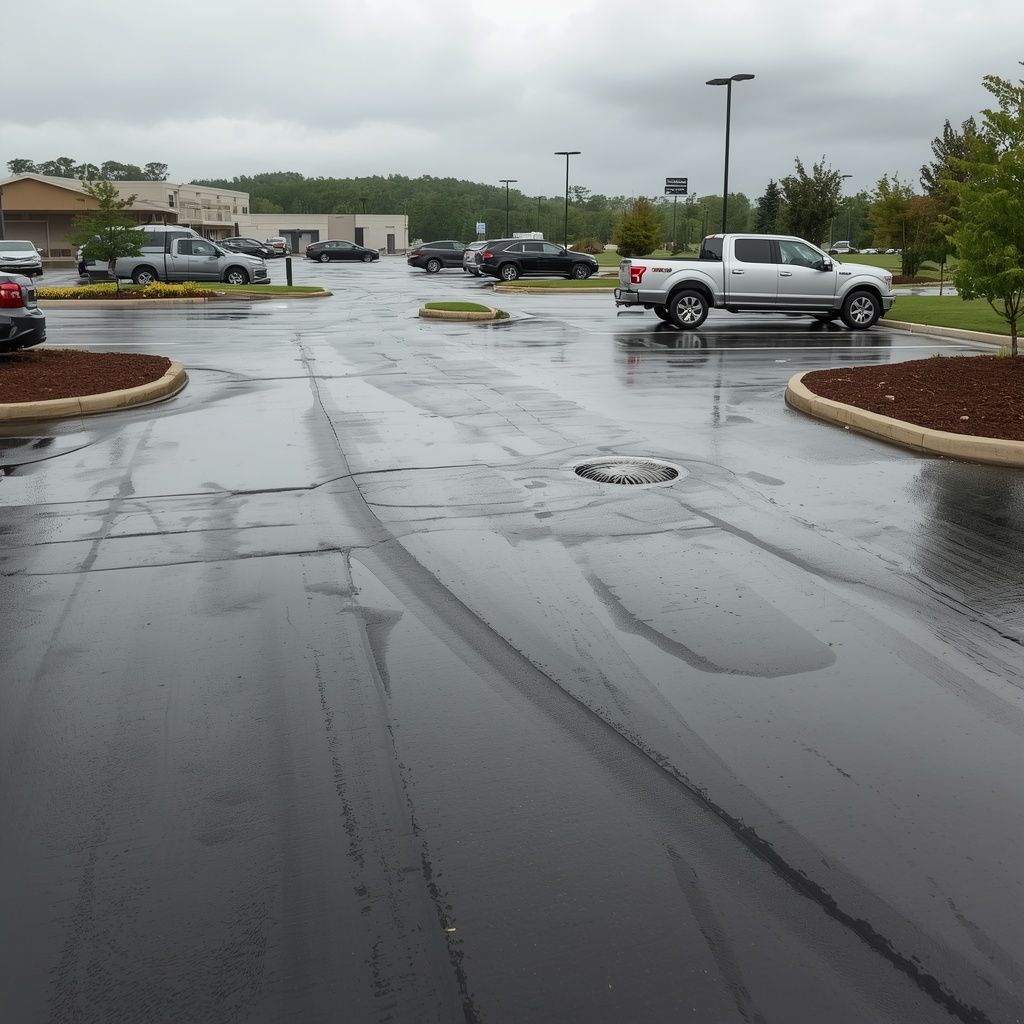
Poor parking lot drainage allows water to seep into and beneath asphalt, causing cracks, potholes, and base layer failure. Maintaining a proper slope of 1–2%, cleaning catch basins quarterly, and scheduling annual professional assessments can extend pavement life by 10 or more years and significantly reduce repair costs.
A parking lot might not be the most glamorous part of a property, but it is often the first thing visitors see. More importantly, it takes a beating every single day from vehicle traffic, UV exposure, and weather. Of all the forces that wear down asphalt over time, water is the most destructive. Without an effective drainage system in place, even a well-constructed parking lot can deteriorate years ahead of schedule.
For municipalities, schools, government facilities, and commercial properties, premature asphalt damage translates directly into budget overruns and safety liabilities. The good news is that most water-related pavement damage is entirely preventable. TruBlue Services, a South Carolina-based facility maintenance company with over 50 years of combined industry experience, helps organizations protect their parking lots through professional drainage solutions and comprehensive asphalt maintenance.
This guide breaks down why drainage matters, what problems arise when it fails, and the practical steps you can take to keep your pavement in top shape.
Why Water Is Asphalt's Biggest Enemy
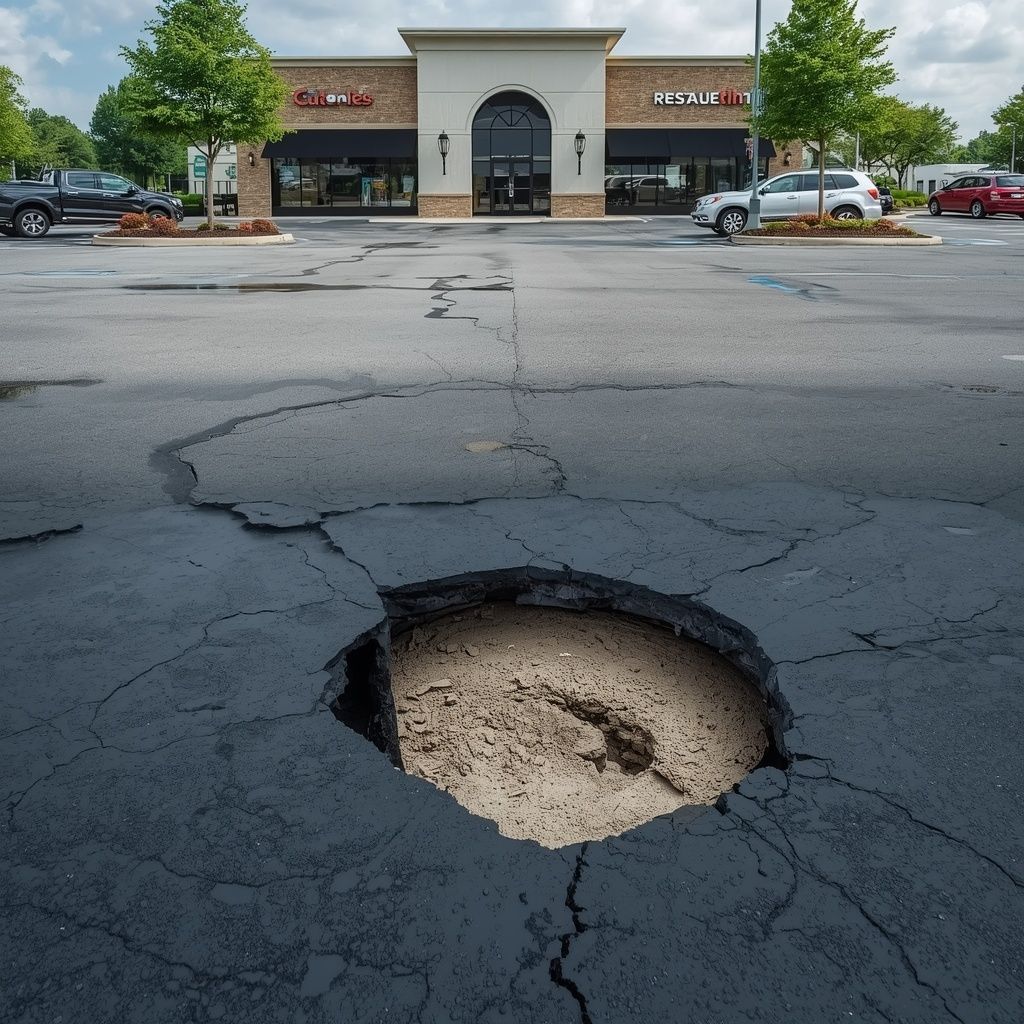
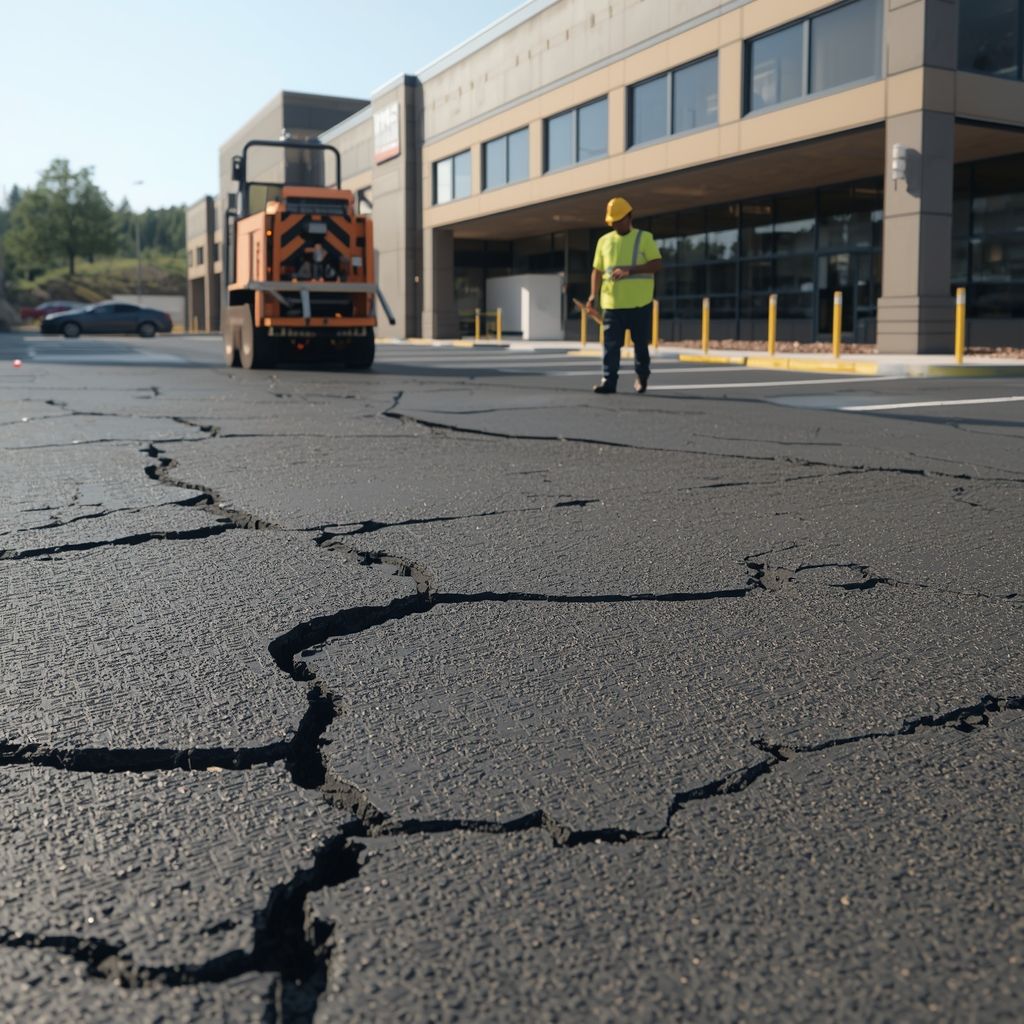
Asphalt is a durable material, but it is not waterproof. When water has no clear path off a parking lot surface, it begins to work its way into every small crack and weak point. During colder months, that trapped moisture freezes and expands, widening cracks with each freeze-thaw cycle. Over time, water also infiltrates the sub-base beneath the pavement, softening the foundational layers that give asphalt its load-bearing strength.
The consequences are visible and costly. Standing water accelerates surface oxidation, strips away the binder that holds aggregate together, and creates ideal conditions for potholes to form. Beyond structural damage, pooled water creates slip hazards for pedestrians and can lead to liability claims for property owners.
According to the Federal Highway Administration, proper pavement drainage is one of the single most important factors in extending pavement service life. Facilities that invest in sound drainage management can realistically extend asphalt lifespan by 10 years or more while keeping routine parking lot maintenance costs low.
Common Drainage Problems That Damage Parking Lots
Understanding what causes drainage failure is the first step toward preventing it. Most parking lot drainage issues fall into a few recurring categories:
- Improper slope design: Parking lots require a minimum grade of 1–2% to move surface water toward drains. Lots with flat or uneven grading allow water to pool in low spots, where it slowly erodes the pavement beneath it.
- Clogged catch basins and storm drains: Debris, sediment, and leaves accumulate in catch basins over time. When these become blocked, water has nowhere to go and backs up across the surface.
- Deteriorated or missing drainage infrastructure: Older facilities may have drainage systems that were never adequate to begin with or have simply failed through years of neglect.
- Deferred maintenance: Small drainage issues compound quickly. A minor low spot or partially blocked drain becomes a much larger and more expensive problem when left unaddressed through multiple rain seasons.
How Proper Drainage Protects Asphalt
A well-designed and well-maintained drainage system does more than move rainwater off a surface. It protects the entire pavement structure from the ground up.
Correct Grading Keeps Water Moving
The slope of a parking lot is its first line of defense. Water that flows freely toward a drain cannot pool, penetrate the surface, or undermine the base layers below. During construction or resurfacing, proper grading is essential. For existing lots with drainage problems, regrading targeted sections can resolve chronic pooling issues without a full repaving project.
Functional Storm Drain Systems Prevent Accumulation
Catch basins and storm drains need to be in good working order to handle heavy rainfall events. Routine parking lot cleaning, including clearing debris from drain openings, plays a direct role in how well these systems perform. A drain that runs clear during light rain but floods during a downpour is a sign that the system is partially obstructed and needs attention.
Permeable Sub-Base Layers Support Long-Term Drainage
Beneath the visible asphalt surface lies a sub-base layer that provides structural support. In well-designed systems, this layer also allows excess moisture to drain away rather than sitting beneath the pavement and softening it. If the sub-base becomes saturated or compromised, resurfacing the top layer alone will not fix the underlying problem.
Regular Asphalt Maintenance Seals Out Water
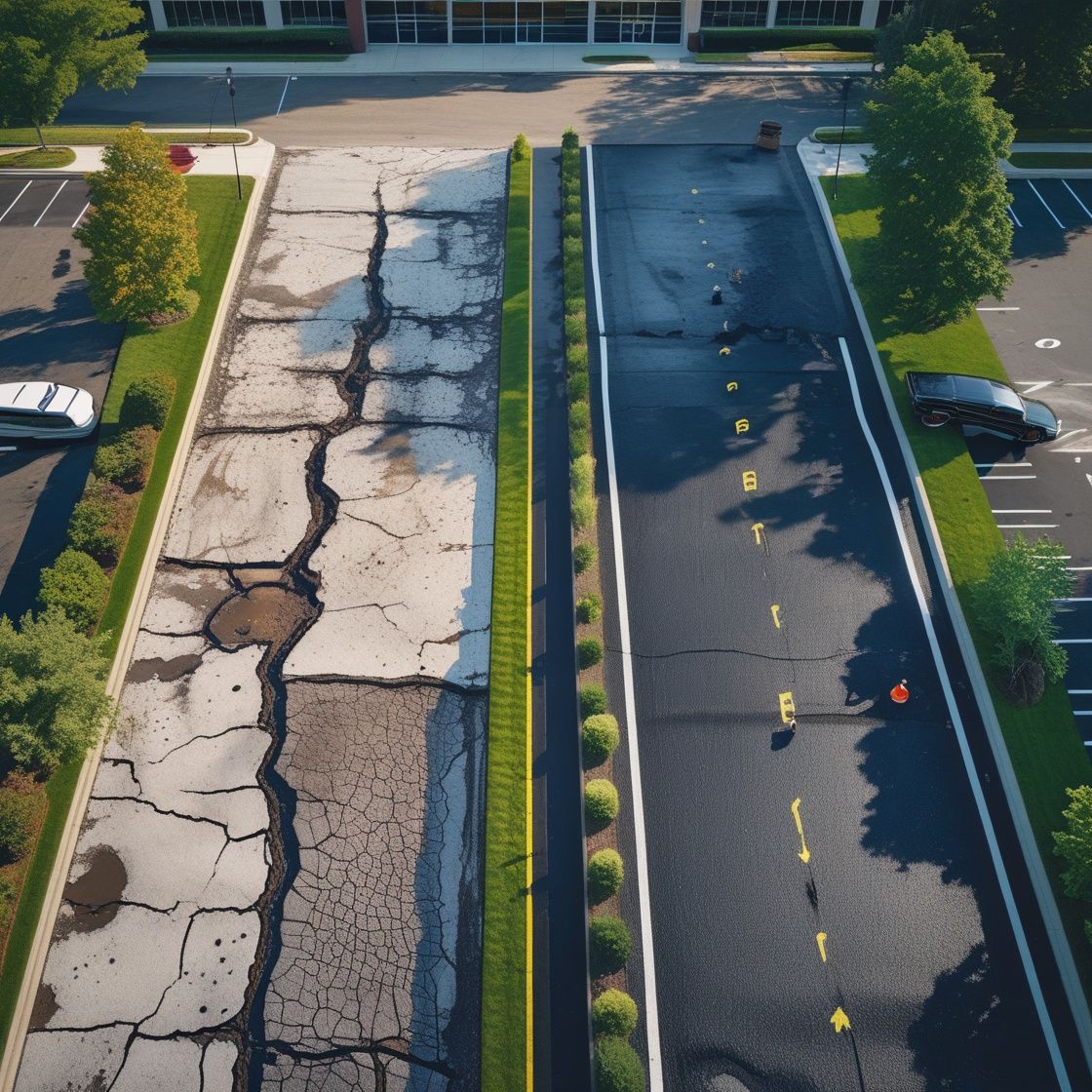
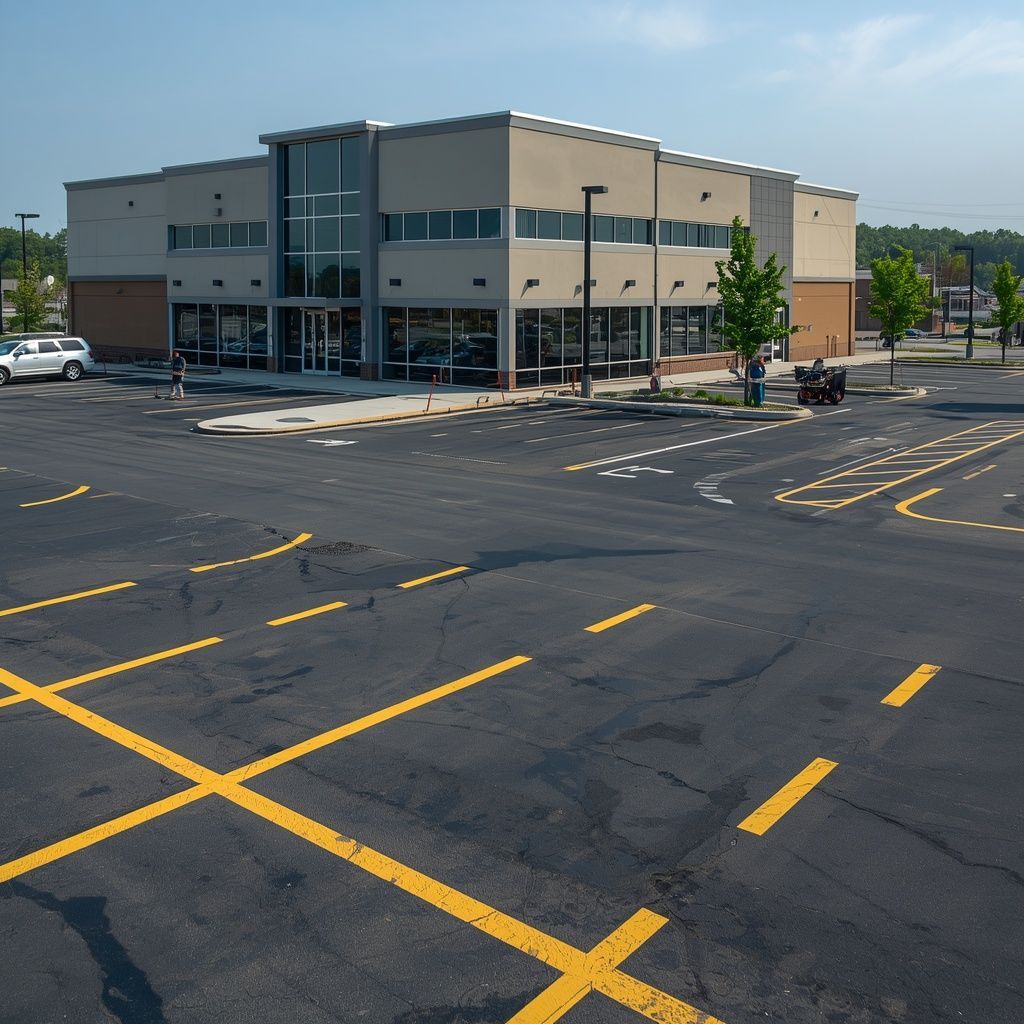
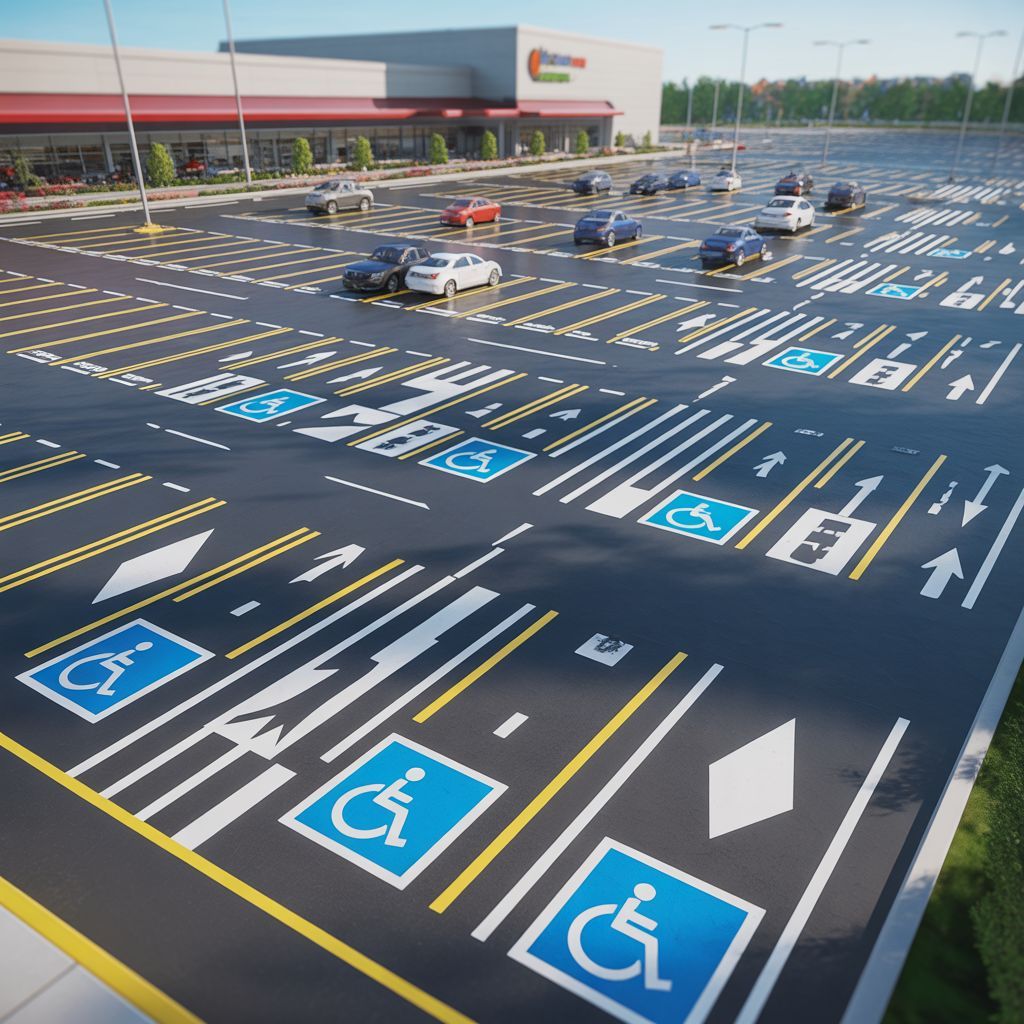
Crack sealing is one of the most cost-effective forms of asphalt maintenance available. Every unsealed crack is an entry point for water. Filling cracks promptly, combined with periodic sealcoating, creates a surface that actively repels water rather than absorbing it. This approach also keeps parking lot striping and line striping looking sharp longer, since water intrusion beneath markings causes them to fade and peel.
Best Practices for Parking Lot Drainage Maintenance
Keeping a parking lot's drainage system in good condition does not require a major overhaul every year. Consistent, scheduled maintenance is far more effective and affordable than emergency repairs. Here are the key practices to follow:
- Inspect and clean drainage systems quarterly. Catch basins and storm drain inlets should be cleared of debris at least four times per year, and after major storm events.
- Maintain a minimum slope of 1–2%. Have a professional evaluate the grade of your lot if you notice recurring puddles after rainfall.
- Repair or install catch basins as needed. Outdated or undersized drainage infrastructure should be upgraded before it causes surface damage.
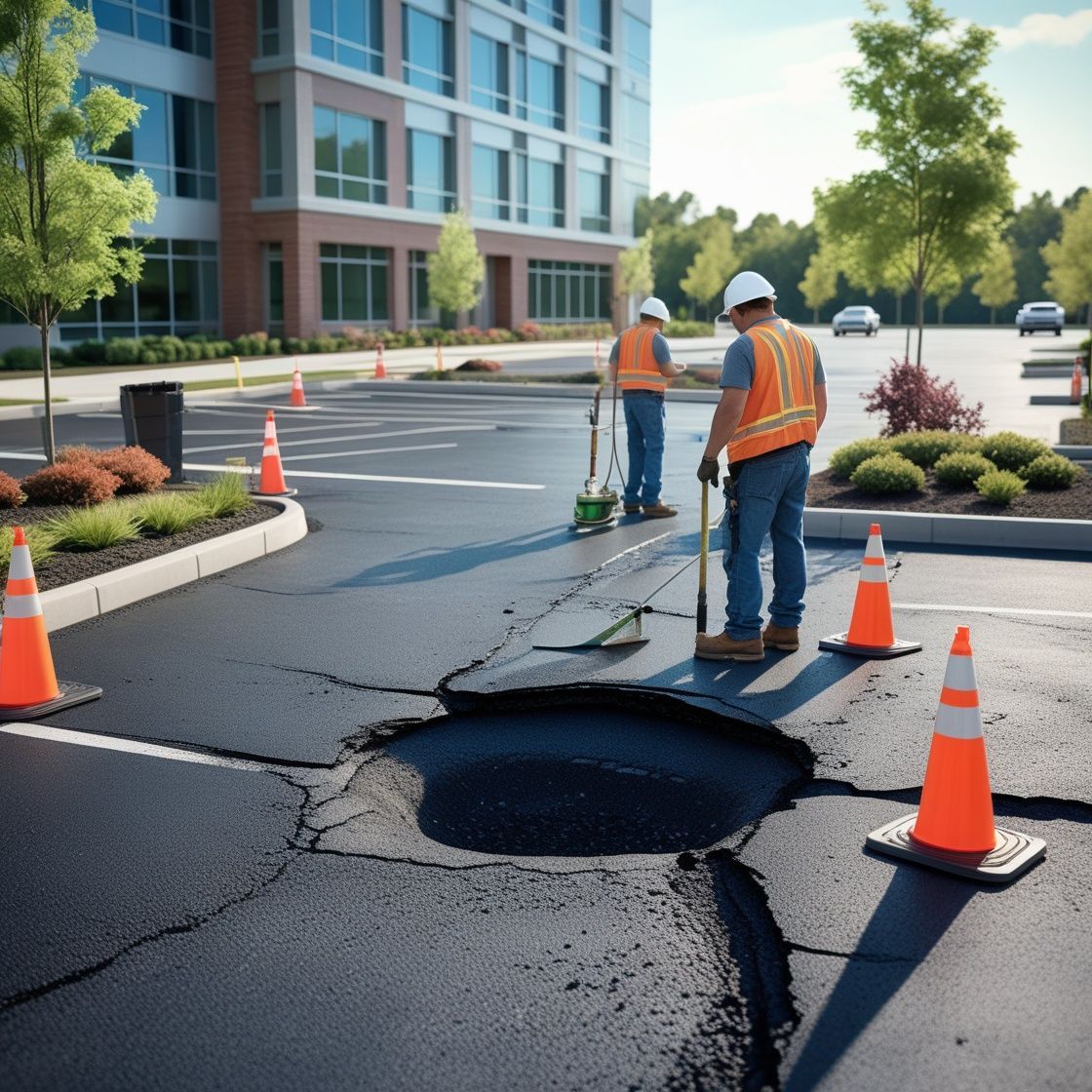
- Seal cracks as soon as they appear. Small cracks are inexpensive to fill. Cracks that expand into full pavement failure are not.
- Schedule a professional assessment annually. A qualified facility maintenance contractor can identify drainage vulnerabilities before they become costly repairs.
- Pair drainage upkeep with regular parking lot cleaning. Keeping the surface free of debris reduces the volume of material that ends up clogging drains over time.
These steps are especially important for high-traffic facilities like government buildings, schools, and university campuses, where parking lot conditions directly affect safety and compliance.
Protect Your Pavement Before the Damage Adds Up
Water damage to asphalt rarely happens all at once. It is a gradual process, one that starts with a blocked drain or an unnoticed low spot and ends with a repaving bill that could have been avoided. The properties that avoid that outcome are the ones that treat drainage as a maintenance priority, not an afterthought.
Investing in proper drainage and regular parking lot maintenance is one of the most cost-effective decisions a facility manager can make. It extends pavement life, reduces long-term expenses, and keeps properties safe for everyone who uses them.
Ready to evaluate your parking lot's drainage and stop small problems before they grow?
Contact TruBlue Services today for a professional assessment and expert maintenance solutions built around your facility's needs.